
On Thursday, July 31 we discussed the growing problem of mobile phone theft via snatching and measures we can take to secure our data.
The discussion arose from an incident in which a member’s relative had had their phone snatched by a bogus taxi in Jávea. The phone was unlocked and a digital bank card had been activated to make a payment when the phone was grabbed. Subsequently, the thieves were able to steal several thousand pounds from his bank account and even take out a loan in his name.
There are two issues:
1. Data security
2. The resale of stolen phones
Data security:
> Theives are interested in your identity:
In today’s digital world, mobile devices store a wealth of personal information, including credentials, banking details, and private photos, among others. Thieves who intend to commit identity theft usually exploit this sensitive data to gain unauthorised access to the user’s personal accounts, make fraudulent transactions, apply for credit cards or loans under the user’s name, and even sometimes engage in other illicit activities without the user’s knowledge Mobile Device Theft – State of Affairs Report https://www.gsma.com/solutions-and-impact/industry-services/device-services/wp-content/uploads/2025/02/Tackling-device-theft-high-res-FINAL-18-feb-25.pdf Page 19 (This report is very comprehensive and up to date)
> Useful tips on protecting your Android or Apple device:
16 tips to protect your phone from thieves: https://www.moneysavingexpert.com/mobiles/steps-to-take-before-your-phone-is-stolen/
>If your iPhone or iPad has been stolen, or you otherwise can’t recover your device, use these steps to protect your device, Apple Account, and personal information. https://support.apple.com/en-us/120837
>IMIE number: One important feature which is frequently highlighted is to make a record of your phone’s IMEI number and store it somewhere away from your phone.
“The International Mobile Station Equipment Identity (IMEI) number is a unique 15-digit code that every mobile device has. It can be used to block or identify a phone if it’s been stolen. Screenshot your IMEI number and email/forward it on to another device for safekeeping. It’s important to know what your IMEI number is so you can give it to the police when you report your phone as stolen. You can also call your network if your phone is nabbed and tell them your IMEI number so they can block (blacklist) your phone to stop it from connecting to any network. To find it..Dial *#06# (star, hash, zero, six, hash) from your device. You’ll see several different numbers displayed on your screen. The one you’re looking for follows ‘IMEI’ or ‘IMEI1’.
However, the bad guys have found a way around IMIE blocking!:
A method has emerged to circumvent national blocklists of IMEI numbers whereby users swap their stolen device (that has been disabled) with someone in another country where no reciprocal device blocking takes place. This peer-to-peer method of re-enabling stolen devices demonstrates the weakness of blocking when countries do not receive or action stolen IMEI data
between them or via the GSMA’s global Device Registry. https://www.gsma.com/solutions-and-impact/industry-services/device-services/wp-content/uploads/2025/02/Tackling-device-theft-high-res-FINAL-18-feb-25.pdf
>Members emphasised the use of biometric phone locks rather than passwords.
>It is also possible to lock or hide sensitive apps, so that bad guys can’t access them even if the phone is unlocked.
Here’s how to lock or hide apps with an iPhone: https://support.apple.com/guide/iphone/lock-or-hide-or-an-app-iph00f208d05/ios
With most Android phones you will have to install an app to do this, such as Applock: https://play.google.com/store/apps/details?id=applock.lockapps.fingerprint.password.locker&hl=en
>We demonstrated Google’s “Find my Phone” – which locates your phone if you have a Google account and if it is powered up https://myaccount.google.com/find-your-phone
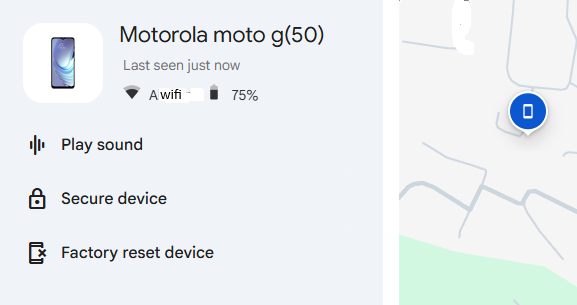
You’ll need to log into your Google account from a PC or other device connected to the Internet. The app gives you a map of the phone’s location and options to make it play a sound (the ring tone), secure the device (lock it) or Factory reset (wipe the device of all user data and accounts). The last option is the most secure if your phone has been stolen, but you should keep a backup of important personal data (usually photos and videos) since these will be deleted in a factory reset.
Apple has a similar feature for iPhones, ipads etc. https://www.icloud.com/find
>NOTE: If your phone is located in a private property, the Spanish police cannot legally enter the premises without a warrant. Which will take ages to obtain.
If you are accidentally locked out of your phone, there are apps to break into it…but these can be used by the bad guys ! https://www.tenorshare.net
The resale of stolen phones
This featured in a recent article in the Daily Mail which described a rash of phone snatching thefts in London. They implied that stolen phones ended up in Hong Kong. https://www.dailymail.co.uk/news/article-14940725/iPhone-snatched-Baker-Street-London-Hong-Kong.html The true picture is more complex than that, and stolen phones turn up all over the world. There is a big market for spare parts, and in many cases, a phone actually has more value when broken down into spares (screen, battery etc.)
This interesting video provides a digestible overview of what happens to stolen phones:
And here are the adventures of an iPhone stolen in Barcelona.